Trampoline Weight Standards
Two Key Weight Limits
- Single Jumper Weight Capacity : This refers to the maximum weight a single individual can be to jump safely on the trampoline. Exceeding this limit can increase the risk of injury and damage to the trampoline.
- Maximum Structural Weight Capacity : This refers to the total amount of static weight a trampoline can hold without collapsing or being damaged. While this number is significantly higher than the single jumper capacity, it’s not relevant for determining safe jumping weight.

Why Single Jumper Weight Capacity Matters Most
When a person jumps on a trampoline, they exert a downward force far greater than their static weight. This dynamic load is what truly tests a trampoline’s limits. That’s why focusing on the single jumper weight capacity is crucial for ensuring safety.
Single Jumper Weight Capacity by Size
Small Trampolines
Examples: 10ft Round, 10ft x 6ft Rectangular
- Typical Capacity: 220 lbs
- 10′ Round: 220 lbs
- 10×6 Rectangular: 220 lbs
Medium Trampolines
Examples: 12ft Round, 11ft x 8ft Rectangular
- Typical Capacity: 250 lbs
- 12′ Round: 286 lbs
- 11×8 Rectangular: 286 lbs
Large Trampolines
Examples: 14ft Round, 14ft x 10ft Rectangular
- Typical Capacity: 270 lbs
- 14′ Round: 286 lbs
- 14×10 Rectangular: 286 lbs
Extra Large Trampolines
Examples: 17ft x 10ft, 17ft x 12ft Rectangular
- Typical Capacity: 300 lbs or more
- 17×10 Rectangular: 330 lbs
Beware of Misleading Claims
Some trampoline companies may advertise their maximum structural weight capacity as a way to mislead customers into thinking their trampolines have a higher weight limit for jumping. Always prioritize the single-jumper weight capacity when making your decision.
The Akrobat Difference: Prioritizing Safety and Quality
At Akrobat, safety is at the forefront of everything we do. Our trampolines are designed and tested to meet the highest safety standards. We ensure a secure and enjoyable bouncing experience for everyone.
Rigorous Testing and Certifications
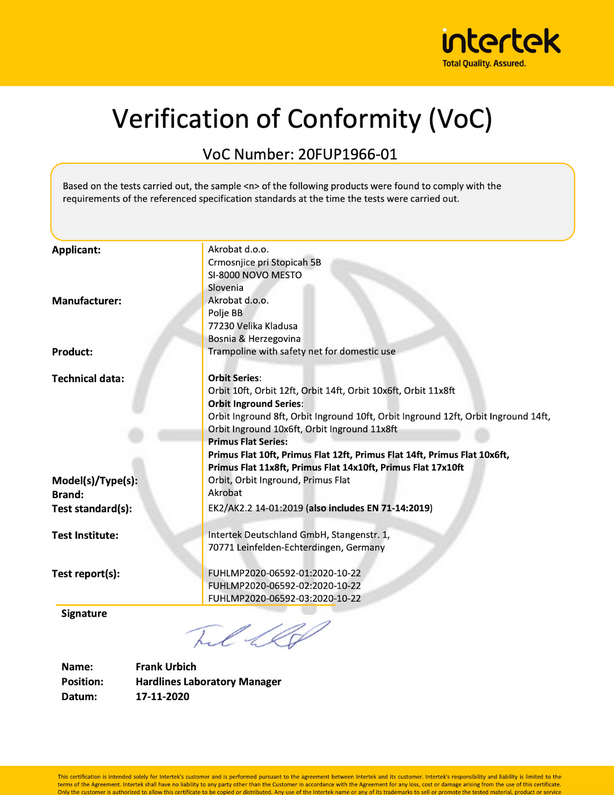
Akrobat trampolines undergo rigorous testing to ensure they meet the following standards:
- EN 71-14: This standard specifies requirements and test methods for trampolines for domestic use, ensuring safety and durability.
- EN 1176: This standard applies to permanently installed public playground equipment, ensuring safety during play.
- EN 913: This standard specifies general safety requirements for gymnastic and sports equipment, including trampolines.
- EN 13219: This standard specifies functional and safety requirements for specific types of trampolines.
- REACH Regulation: This regulation prevents the use of hazardous materials in trampoline manufacturing.
The GS Mark: A Symbol of Quality and Safety
Akrobat trampolines have also received the German GS mark, a safety certification that signifies compliance with strict safety requirements. This mark is awarded by independent testing companies that conduct regular inspections to ensure ongoing compliance.
Choosing the Right Trampoline for Your Needs
- Weight Capacity : Ensure the trampoline’s single jumper weight capacity meets the needs of those who will be using it.
- Safety Standards : Look for trampolines that comply with recognized safety standards, such as EN 71-14 and the GS mark.
- Quality and Durability: Choose a trampoline made from high-quality materials and built to last.